Hurricane Rapid Recovery Insurance
Loss payments within days after a devastating storm, to secure livelihoods and keep businesses running.
Overview
The parametric Hurricane Rapid Recovery Insurance (HRRI) provides loss payments to policy holders after a devastating storm to secure livelihood or keep businesses running within days.
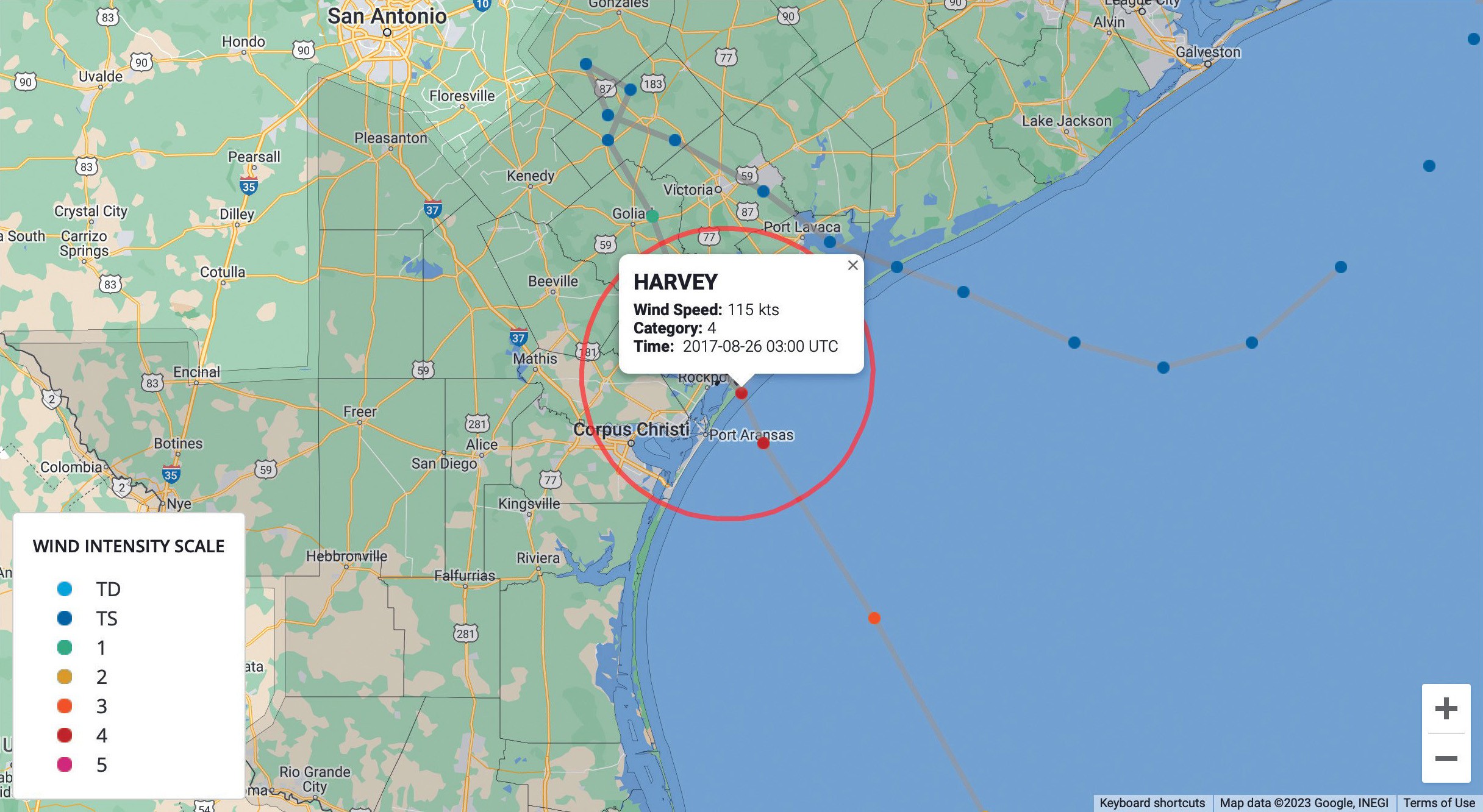
The loss payment is defined by the maximum hurricane category of the hurricane path intersecting the Insured Location. The Insured Location is one or multiple circles with a radius in miles around the Insured Address.
In the trigger event, based on the data from the National Hurricane Center (NHC), the loss payment is wired to the policyholder's bank account within days.
The main benefits
- 01No proof of physical loss to your property
- 02No proof of loss to business income
- 03Loss payment wired within days directly to the insured
- 04Loss trigger based on data from the National Hurricane Center (NHC)
- 05Transparent product administered through a best-in-class platform
- 06Backed by a reputable reinsurer
How it works
Parametric insurance pays within days after a Hurricane.
The trigger and the payout are agreed before cover starts.
- Step 01
Event measured
The National Hurricane Center records 6-hourly and landfall points for each hurricane track: wind speed, storm category, location and time.
- Step 02
Agreed threshold met
The track crosses the Insured Location, a circle around the Insured Address, at a category that pays under the Event Coverage Table.
- Step 03
Pre-agreed payout
The loss payment is wired to the policyholder's bank account within days. No proof of physical loss is needed.

Which category counts
The relevant hurricane category for the insurance is the highest value of:
Hover over a rule to see it on the track
- The last measurement point before the track intersects the Insured Location
- Any measurement point within the Insured Location
- The first measurement point after the track has left the Insured Location
ExampleIn this example the highest category is Cat. 4, so the payout is 40% of the policy limit.
Event coverage
If the path of a hurricane intersects the Insured Location, loss payments are due based on the Event Coverage Table. There may be multiple payouts during the Policy Period; the maximum payout is capped at the Sum Insured.
Policy terms
An example of the terms of an HRRI policy.
- Insured Address
- Address of client property
- Insured Location
- Circle around the Insured Address
- Policy Period
- 1 year (or season)
- Peril
- Losses from hurricane event
- Event
- Hurricane track intersecting the Insured Location
- Eligible Event
- Maximum reported hurricane category is equal to or higher than the minimum payout derived from the Event Coverage Table
Payout example
A shop owner in Panama City, FL purchased an HRRI for the 2018 storm season with a Policy Limit of $1,000,000. The Insured Location is a circle with a 40-mile radius around the shop, the Insured Address.


Hurricane Michael intersected the Insured Location as a Category 5 storm. Therefore the owner received a $1,000,000 payout.
Other products


